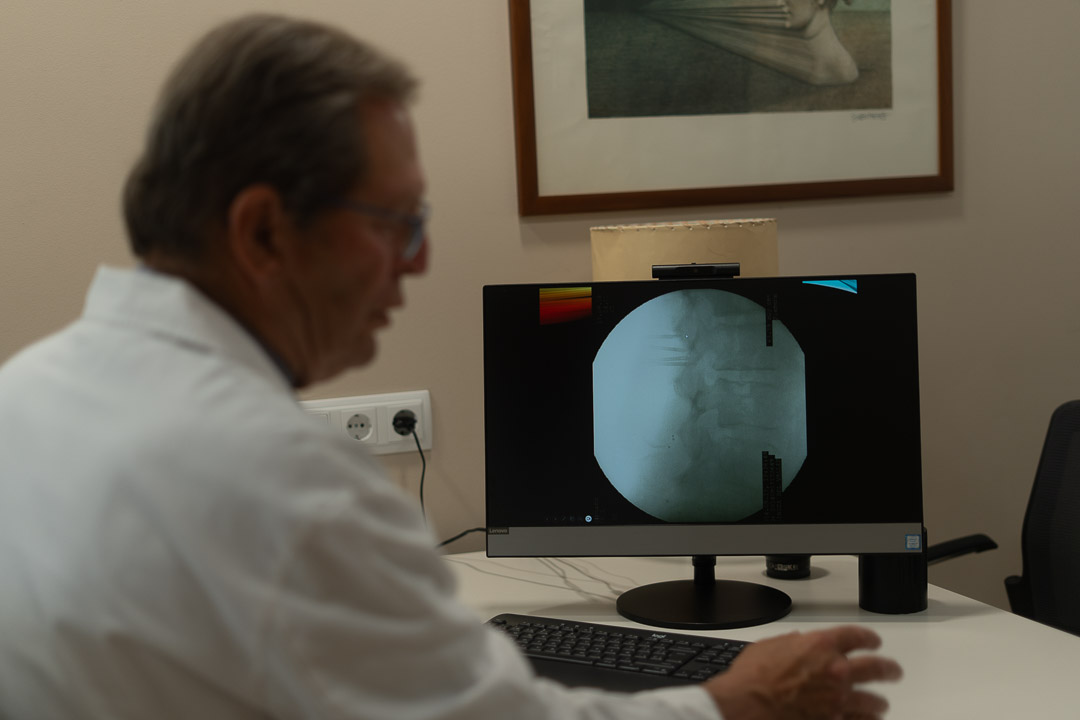
Osteoarthritis is primarily identified by deep joint pain after physical activity, morning stiffness, and a progressive loss of function. To confirm an osteoarthritis diagnosis, a medical professional conducts a detailed clinical interview and a thorough physical examination to assess joint health.
That knee pain when walking down stairs, the morning stiffness in your fingers that takes a while to loosen up, or that hip discomfort you can no longer ignore: many people live with these symptoms for months or years without knowing the cause. Osteoarthritis is the most common joint condition in adults, yet it remains one of the most misunderstood. Catching it early makes a real difference in treatment outcomes and your overall quality of life. This guide provides a clear, practical look at how to identify the signs, what the different stages mean, how a diagnosis is confirmed, and exactly when you should consult a specialist.
What is Osteoarthritis and Why Does It Develop?
If you’ve spent weeks noticing discomfort in a knee, hip, or your fingers, you’re likely looking for answers. Osteoarthritis is the leading cause of chronic joint pain in adults, and understanding what is happening inside the joint is the first step toward managing it effectively.
Articular cartilage acts as a shock absorber between bones. When it wears down progressively, bones begin to rub directly against each other, causing pain, stiffness, and loss of mobility. This process is degenerative and mechanical, rather than an autoimmune inflammatory condition. This is the key distinction that often causes confusion: osteoarthritis is structural wear and tear of the cartilage, while rheumatoid arthritis is an inflammatory disease where the immune system attacks the joints. They are different processes requiring different treatments.
Osteoarthritis arises from a combination of factors. Age is the primary driver (risk increases significantly after 45-50), but excess weight, genetics, previous joint injuries, and repetitive strain from work or sports also play a role. In Spain, it affects over seven million people, and at my clinic in Sabadell, these cases are a daily reality for patients of all ages.
Recognizing specific symptoms beyond generic aches is what allows for timely identification. The difference between an early osteoarthritis diagnosis and a late consultation can define your long-term prognosis.
Osteoarthritis Symptoms: How to Recognize the Warning Signs

Accurately identifying the symptoms of osteoarthritis is what separates a timely consultation from years of poorly managed discomfort. The most characteristic pattern is mechanical pain: it appears when you move and clearly improves with rest. This distinguishes it from inflammatory pain, which is constant even at night. If your pain flares up while walking and subsides when you sit down, that sequence is a classic indicator.
Other common symptoms to watch for:
Brief morning stiffness: your joints feel locked when you wake up but loosen within 30 minutes. If it lasts longer, it may point to a different inflammatory process.
Crepitus: grinding, clicking, or a popping sensation when bending your knee, turning your neck, or making a fist. It isn't always painful, but it is a sign of joint wear.
Progressive loss of mobility: finding it harder to reach the floor, turn while parking the car, or fully extend your arm.
Occasional swelling: during flare-ups, the joint may become swollen and warm, though this is usually not constant.
The location of the pain also provides vital clues for an initial diagnosis:
Area | Specific Signs |
|---|---|
Knee | Pain when going downstairs, difficulty rising from a chair, or a feeling of instability under weight. |
Hip | Pain in the groin or inner thigh, or a slight limp toward the end of the day. |
Hands and Fingers | Hard bumps on the knuckles (Heberden's nodes), and difficulty opening jars or fastening buttons. |
Cervical (Neck) | Neck pain radiating toward the shoulder or arm, especially with sudden turns. |
Lumbar (Lower Back) | Lower back pain after standing for long periods, relieved by sitting or lying down. |
Crucially, these symptoms don't all appear at once or with the same intensity. Initially, they are intermittent and easy to dismiss as tiredness or a "bad move." Paradoxically, this subtle phase is when treatment has the greatest impact on the disease's progression.
Stages of Osteoarthritis: From Early Phase to Advanced Wear

Knowing you have joint pain is one thing; knowing the extent of the wear is another. The Kellgren-Lawrence scale, the standard system used in radiology to classify osteoarthritis, divides the disease into four stages that directly guide treatment decisions.
Stage | Radiological Findings | Typical Clinical Experience |
|---|---|---|
Stage 1 | Minimal joint space narrowing, possible small bone spurs (osteophytes). | Symptoms are mild or entirely absent. |
Stage 2 | Moderate cartilage loss, more defined bone spurs. | Pain during intense activity, intermittent discomfort. |
Stage 3 | Significantly reduced joint space, subchondral sclerosis. | Frequent pain and more persistent stiffness. |
Stage 4 | Cartilage is virtually non-existent, visible joint deformity. | Chronic pain and severely limited mobility. |
The most surprising fact for many patients is that most people in Stage 1 or 2 don't realize they have osteoarthritis yet. Symptoms are so intermittent they are attributed to fatigue or a one-off strain. However, it is precisely in these phases where intervention has the most significant impact on slowing the disease.
Acting during Stage 1 or 2 allows us to slow down the wear and keep non-invasive treatment options on the table. Reaching Stage 4 without prior intervention considerably narrows those options. That is why, at my Sabadell clinic, I evaluate the exact stage of every patient before making any therapeutic decisions: no two cases are the same, and your treatment plan must reflect that.
How is Osteoarthritis Diagnosed? Tests and Clinical Examination

Once the degree of joint wear is identified, the next step is to confirm the diagnosis accurately. The most frequent question I hear in my practice is: what test is used to detect osteoarthritis?
The answer is that an osteoarthritis diagnosis is primarily clinical and radiological. An MRI is not always necessary, and blood tests alone cannot confirm or rule out the disease. The process follows a logical sequence:
Clinical History: The specialist asks about the pain pattern—when it appears, what triggers it, and what relieves it. The mechanical profile described earlier (pain with movement, relief with rest) strongly points toward a diagnosis during this first conversation.
Physical Examination: Direct palpation of the affected joint, evaluation of active and passive range of motion, and detection of crepitus, swelling, or signs of local inflammation. This exam provides information that no image can replace.
Standard X-ray: This is the gold standard test. It clearly shows joint space narrowing, bone spur formation, and subchondral sclerosis—the three radiological findings that define the Kellgren-Lawrence stages.
MRI: This is reserved for cases with diagnostic uncertainty or when soft tissue involvement (such as menisci or ligaments) is suspected; it is not requested routinely.
Blood Tests: These do not confirm osteoarthritis, but they help rule out rheumatoid arthritis or other inflammatory causes when the clinical picture is unclear.
In the diagnostic process we follow at the Sabadell clinic, a comprehensive clinical examination is always the starting point. Ordering tests without this step adds time and cost without improving diagnostic accuracy in most cases.
At What Age is Osteoarthritis Normal and Who is at Risk?
Once a diagnosis is established, many patients ask: is it normal to have osteoarthritis at my age?
The short answer is that osteoarthritis can appear at any age, but its frequency increases significantly after 50. In Spain, over 40% of people over 70 have osteoarthritis in at least one joint. It is not an anomaly; it is the cumulative result of decades of joint use.
However, age is not the only factor. Certain conditions can cause joint wear to manifest before age 40:
Obesity: every extra pound multiplies the load on knees and hips.
Repetitive Physical Labor: manual laborers, farmers, and healthcare workers facing continuous postural strain.
Previous Sports Injuries: a previous meniscus surgery or ligament reconstruction accelerates local wear.
Family Genetics: if parents or grandparents had osteoarthritis, your risk is significantly higher.
Women show a higher prevalence of hand and knee osteoarthritis, especially after menopause, when the drop in estrogen reduces cartilage protection.
The practical takeaway: you don't need to wait for intense pain or visible deformity to seek help. Identifying your risk factors and getting an early assessment is exactly what keeps more therapeutic options open for you.
When to See a Specialist: Signs You Should Not Ignore

Identifying risk factors is helpful, but there is a more concrete step: knowing when to stop waiting and seek a specialist's evaluation. While a family doctor can provide initial guidance, a traumatologist or rheumatologist is the specialist needed to complete the diagnostic process accurately and define a real treatment plan.
These criteria indicate it is time to book an appointment:
Persistent joint pain for more than 6 weeks, without a clear injury to explain it.
Pain during everyday activities: walking at a normal pace, climbing stairs, opening a tap, or getting out of a chair.
Morning stiffness lasting more than 30 minutes, as exceeding this threshold may suggest an additional inflammatory process.
Grinding accompanied by a feeling of the joint locking or giving way, not just mild clicking during movement.
Visible swelling or localized heat in the joint, especially if it occurs repeatedly.
Loss of strength or mobility affecting your routine: stopping activities because it hurts isn't "adapting," it's allowing the disease to progress.
Any one of these points justifies a consultation. A combination of several makes it essential.
In my Sabadell practice, I work as a traumatologist with specialized training in medical acupuncture and gold micro-implants. This allows me to offer an approach that goes beyond simple painkillers and "waiting it out." This is especially relevant for patients who want to explore real alternatives before considering surgery. If you recognize these signs, the time to book a consultation with Dr. Tegiacchi in Sabadell is now, not when the pain becomes unbearable.
What Happens if Osteoarthritis is Left Untreated?
Untreated osteoarthritis does not stop on its own. Cartilage cannot regenerate spontaneously, so the wear continues gradually until the joint space closes completely. What was intermittent discomfort in Stage 1 becomes, without intervention, the daily chronic pain of Stage 3 or 4.
This process has a domino effect that extends beyond the affected joint. Surrounding muscles weaken from disuse, the patient reduces physical activity to avoid pain, and this sedentary lifestyle further accelerates the wear. Chronic pain disrupts sleep, mood, and the ability to maintain a normal life. It is more than just a joint issue.
In advanced stages, therapeutic options narrow considerably. Once Stage 3 or 4 is established, joint replacement surgery often becomes the primary alternative. However, when an osteoarthritis diagnosis is made early, the room for maneuver is much greater: medical acupuncture, gold micro-implants, targeted physiotherapy, and lifestyle adjustments can slow progression in a real and sustained way. If you want to learn more about these options, my article on treating osteoarthritis without surgery explains them in detail.
Identifying osteoarthritis symptoms early is fundamental to protecting your quality of life. While degenerative changes are natural as the years pass, there are many strategies to manage pain and regain mobility. If you feel this discomfort is affecting your daily routine and you are looking for expert guidance, I invite you to explore the Treatments I offer. Finding a personalized plan is the next logical step in caring for your joint health professionally and safely.