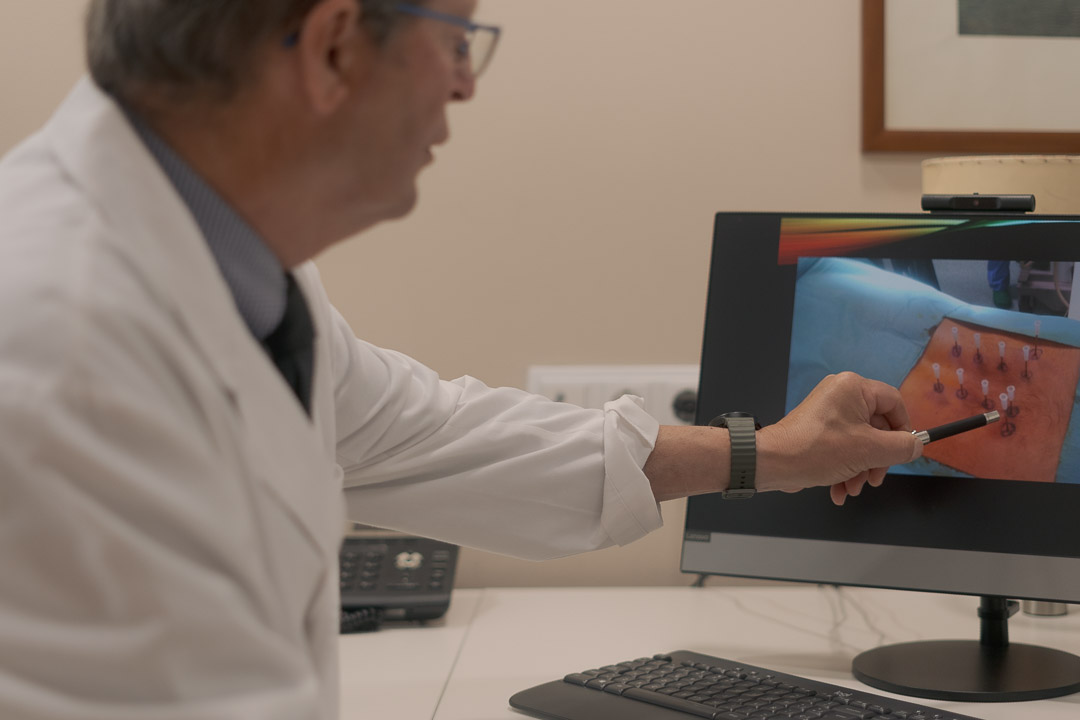
Medical acupuncture is an effective therapy that reduces joint pain and improves physical capacity in areas such as the knees, hands, and hips. Numerous studies indicate that this technique provides significant short-term relief and optimizes patient mobility, making it a recommended complementary option for safely managing rheumatic symptoms.
If you live with osteoarthritis, you already know the struggle: waking up with stiffness that takes forever to fade, or limiting your life because pain has become the main character of your day. While anti-inflammatories help, they aren't always enough, and many patients seek options to complement their treatment without adding more side effects. Medical acupuncture is one of those options, and it has more scientific backing than most people realize. In this article, you will understand exactly what happens in an osteoarthritic joint during acupuncture, what the most rigorous clinical reviews say, which joints respond best, and when it makes sense to incorporate it into your treatment plan.
How Acupuncture Actually Affects an Osteoarthritic Joint
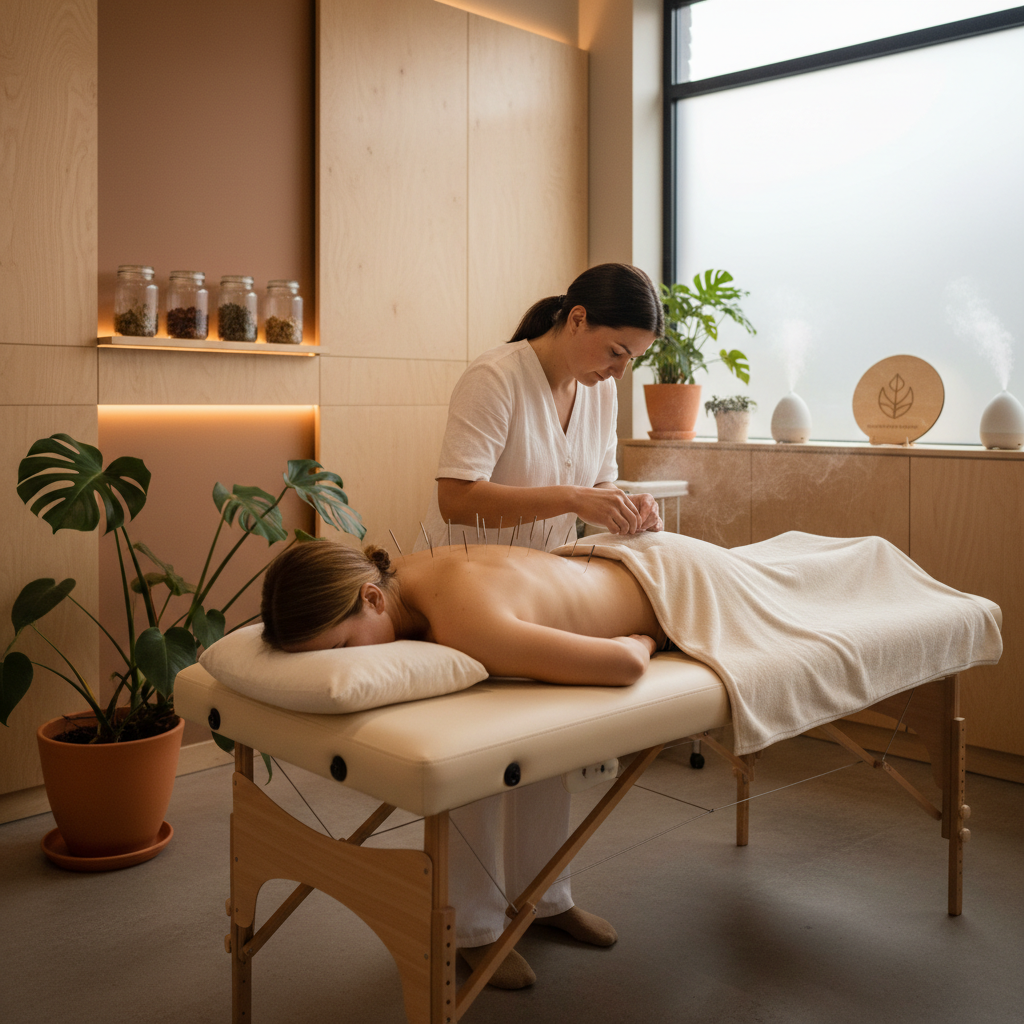
When patients ask me exactly what acupuncture does for an osteoarthritic joint, the short answer is this: it doesn't just target the pain directly; it targets the inflammation causing it. That distinction completely changes how we approach treatment.
Unlike traditional Chinese acupuncture based on meridians and life energy, medical acupuncture is grounded in modern neuroanatomy and neurophysiology. The precise insertion of needles at specific points triggers measurable and reproducible physiological responses.
The primary documented mechanisms include:
Release of endogenous opioids: endorphins, enkephalins, and dynorphins that modulate pain perception at the spinal and brain levels.
Modulation of pro-inflammatory cytokines: reduction of TNF-α, IL-1β, IL-6, and COX-2—the very molecules involved in the progressive destruction of joint cartilage.
Improvement of local microcirculation: increasing the supply of oxygen and nutrients to the periarticular tissue.
Reduction of periarticular edema: decreasing inflammatory infiltration around the affected joint.
Elevation of endogenous cortisol: activating the adrenal axis for a sustained anti-inflammatory effect.
The result is that as the inflammatory load decreases, pain naturally subsides. This contrasts with conventional painkillers, which interrupt the pain signal without modifying the underlying inflammatory environment. In clinical practice, this distinction matters: treating the root cause allows for more long-lasting relief and, in many cases, reduces dependence on analgesic medication and its known digestive side effects.
The Science: Cochrane Reviews, Meta-analyses, and Clinical Studies
With the physiological mechanisms clear, the next question is inevitable: what does the clinical research actually say?
The most cited Cochrane review on acupuncture for osteoarthritis documents a slight but statistically significant improvement in pain and physical function after 8 weeks of treatment. It is an honest result: not a miracle cure, but clinically relevant for patients who have spent months taking anti-inflammatories with only partial and inconsistent relief.
Even more clinically relevant is the meta-analysis published in Arthritis and Rheumatology, with a Level Ib evidence rating. In that study, patients treated with electroacupuncture three times a week for 8 weeks showed improvements in pain and joint function that were maintained through 26 weeks of follow-up. In other words, the effect didn't vanish once treatment ended—something rarely seen with conventional painkillers. Furthermore, evidence from combined studies shows that pairing acupuncture with pharmacological treatment yields better results than medication alone.
However, it is important to be precise about the limitations. The evidence is stronger for knee osteoarthritis than for the hip, where anatomical accessibility complicates both the technique and study design. Effects on pain appear most consistent in the short to medium term, while long-term data remains more varied.
My take on this evidence is straightforward: it is sufficient to recommend medical acupuncture as a complementary treatment, though not as a substitute for a full orthopedic evaluation. A patient with osteoarthritis first needs to know exactly what degree of damage they have and what options are on the table.
Knee, Hip, and Hand Osteoarthritis: Does It Work the Same for Every Joint?
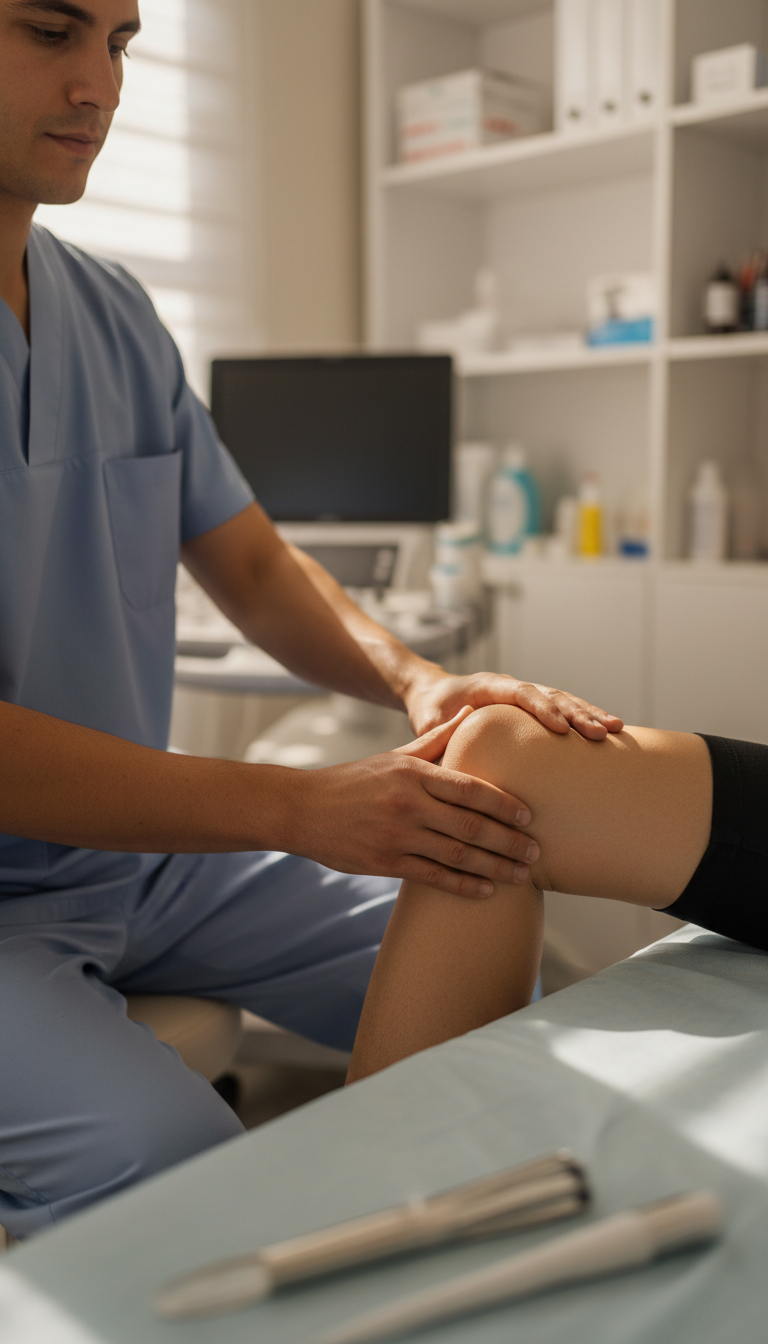
While the general evidence is positive, it’s worth clarifying something few sources mention: the response to acupuncture for osteoarthritis is not uniform across all joints. Anatomical location, tissue depth, and the degree of degeneration all influence both the technique and the expected results.
Knee: Where the evidence is strongest
Knee osteoarthritis is the focus of most available clinical studies, and the results are the most consistent. The joint is accessible, insertion points are well-documented, and the therapeutic response is measurable with validated scales. In practice, the most used points include ST36 (Zusanli), located on the front of the leg to modulate systemic inflammation, and SP9 (Yinlingquan) on the inner knee, which acts locally on periarticular swelling. This is the joint where I most frequently see a clear response within the first few weeks of treatment.
Hip: Greater complexity, moderate evidence
Hip osteoarthritis presents more technical challenges. The depth of the joint requires longer needles and precise anatomical knowledge to reach target tissues safely. Available studies show benefits, but the variety of techniques used means the evidence is less definitive than for the knee. It doesn't necessarily work less effectively, but the margin of variability between patients is higher.
Hands and Lower Back: Local and distal points
For hand osteoarthritis, combining local points on the finger joints with distal points like LI4 allows us to address both the local inflammatory component and central pain modulation. In the lower back, paravertebral points are complemented by distal points in the lower limbs to optimize the analgesic effect and improve functional mobility.
In all cases, the degree of joint degeneration is a deciding factor: the more cartilage is destroyed, the less acupuncture can do to reverse structural issues, though pain management remains an achievable goal.
Medical vs. Traditional Acupuncture: Why Your Specialist Matters
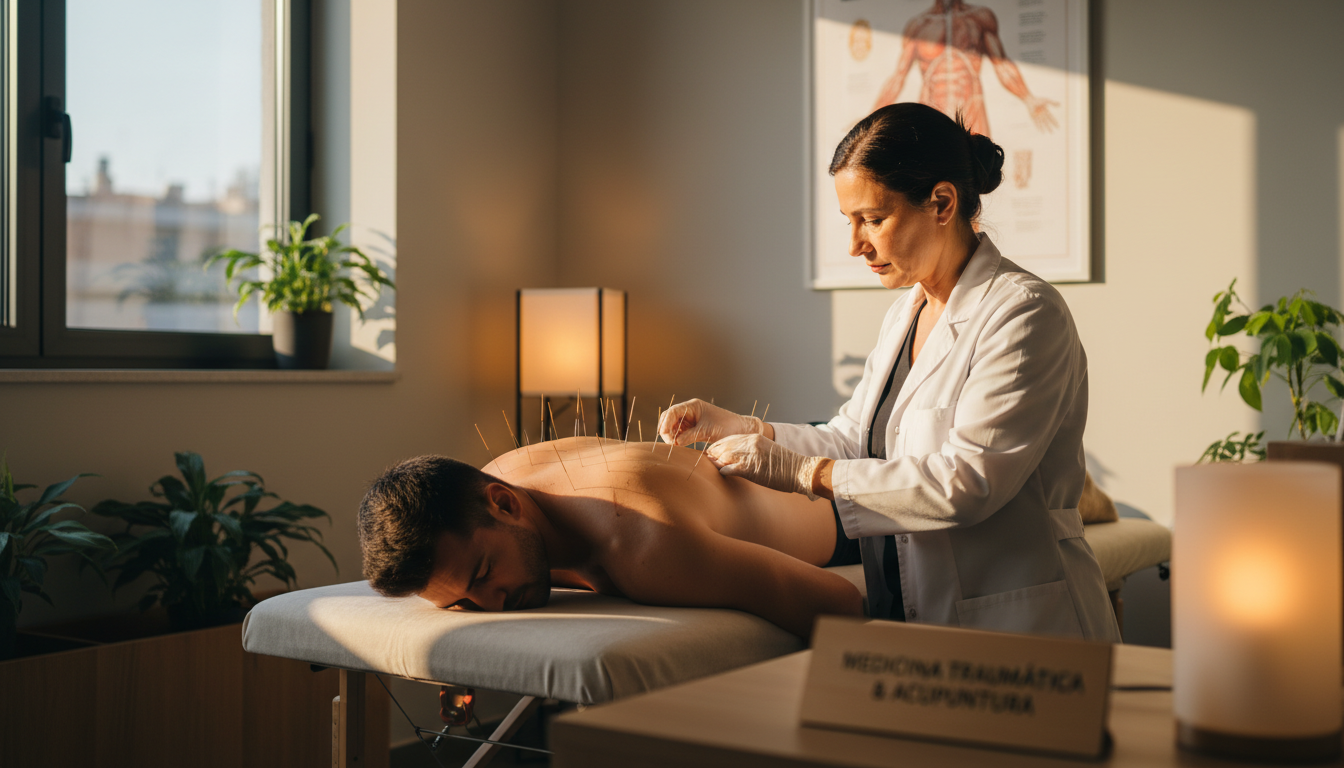
The differences between joints make it clear that acupuncture for osteoarthritis is not a one-size-fits-all technique. This leads directly to a question few patients ask before booking: who is applying the needles and what is their clinical criteria?
Medical acupuncture is practiced by a physician with specific training in neuroanatomy and applied neurophysiology. This changes the entire process. Before deciding which points to use, an orthopedic surgeon can read an X-ray, interpret an MRI, and accurately determine the degree of joint degeneration, cartilage damage distribution, and the state of periarticular tissues. This information directly dictates the selection of insertion points, needle depth, and the decision to use electroacupuncture.
An acupuncturist without medical training works with a map of points but lacks the clinical context to interpret what lies beneath. It isn't just about technical skill; it's about the information available when making therapeutic decisions.
In Sabadell and the Barcelona metropolitan area, most acupuncture centers do not have orthopedic specialists. Dr. Tegiacchi combines both specialties in one consultation, allowing him to evaluate the affected joint with orthopedic expertise and design a treatment plan where acupuncture serves its proper role within the patient's actual clinical picture.
When It’s the Best Option—and When It’s Not Enough
Knowing that medical acupuncture has a scientific basis and that the specialist matters is helpful, but it doesn't answer the most practical question: is this the right choice for my specific case?
The patient profile that responds best to acupuncture for osteoarthritis is quite clear in clinical practice. The most suitable candidates are:
Patients with Grade I, II, or III osteoarthritis, where cartilage remains and the goal is to control inflammation and preserve joint function.
People with chronic pain who do not get satisfactory relief from painkillers or anti-inflammatories, or who experience digestive side effects that limit their long-term use.
Patients who want to explore non-surgical options before considering an operation.
Patients on a waiting list for surgery who need functional pain control in the meantime.
Acupuncture alone is not enough when joint destruction has reached Grade IV, with severe loss of joint space and irreversible structural changes. In those cases, the approach requires other interventions, such as gold micro-implants—which have a different, more prolonged action—or surgical options. There are also intermediate situations where acupuncture is effectively combined with other alternatives; you can find a more complete overview in the article on treating osteoarthritis without surgery.
Being direct about this isn't about being alarmist; it’s exactly what allows you to make well-informed decisions.
How Many Sessions You Need and What to Expect
Once it’s clear that medical acupuncture is the right choice for a specific case, the next question is almost always: how long does it take to work?
The honest answer is that it depends on the patient, but clinical data allows us to provide a fairly accurate guide. The first 2-3 sessions have diagnostic as well as therapeutic value: they help evaluate how each individual responds to the needle stimulus. Some patients notice a perceptible improvement by the second session; others need the full cycle for the cumulative effect to become evident. This variability is real, and it’s important to anticipate it so you don't abandon treatment prematurely.
The standard protocol is 1-2 sessions per week for 6-8 weeks. This interval isn't arbitrary: it allows the physiological mechanisms activated in each session to build upon one another without the nervous system losing the response between stimuli. A single isolated session is not representative of what the treatment can achieve.
Regarding available techniques, the choice between manual acupuncture and electroacupuncture is based on the clinical picture. Electroacupuncture, which applies a low-frequency current to the needles, specifically boosts endorphin release and is more suitable when pain is intense or the patient hasn't responded sufficiently to manual acupuncture. It is not used routinely in every case, but rather with clinical discretion.
In the long term, many patients benefit from periodic maintenance sessions, especially during times of increased joint strain or at the first signs of a flare-up.
Medical Acupuncture for Osteoarthritis in Sabadell: Your Consultation with Dr. Tegiacchi

Given everything discussed, the next concrete step for many patients is to request an initial assessment. At Dr. Tegiacchi's clinic in Sabadell, that first meeting doesn't start with needles, but with a full orthopedic evaluation: a review of your medical history, analysis of available imaging tests, and a functional assessment of the affected joint. Only with this context does it make sense to design a treatment plan.
Having an orthopedic surgeon and medical acupuncture specialist in one person eliminates a common problem: patients receiving acupuncture without anyone accurately determining their grade of osteoarthritis or exploring other options. Here, acupuncture for osteoarthritis is chosen as part of an integrative approach, alongside all other available alternatives, not as an isolated treatment of last resort.
Dr. Tegiacchi treats patients from Sabadell and throughout the Barcelona metropolitan area. If you have been looking for a real solution for chronic joint pain, you can take the first step and book your consultation with Dr. Tegiacchi in Sabadell.
Medical acupuncture is a solid, science-backed tool for reducing osteoarthritis pain and improving quality of life. By integrating this treatment, it is possible to reduce drug dependency and regain mobility naturally. However, every patient is unique and requires a precise diagnosis to achieve optimal results. If you are looking for expert help for your specific case, you can find more information in my About section to learn about my professional background and methodology.